Fantasy is all made up.
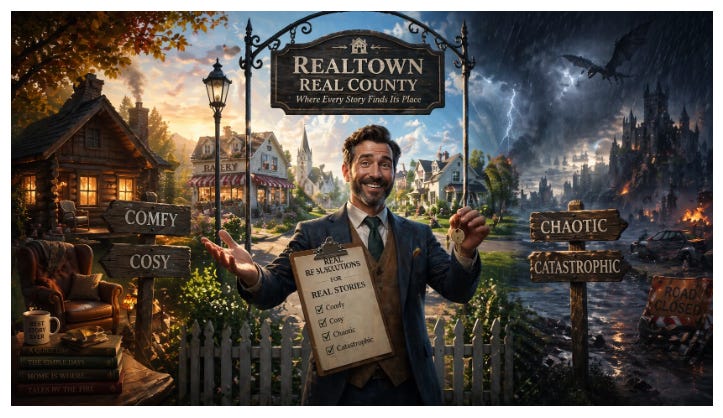
Whether a story is set yesterday in a close approximation of reality or if the author invents Realtown in Real County, complete with a realtor who is really good at their job. Comfy or cosy, chaotic or catastrophic.
For this reason, I look fondly back to when, as a boy, I perused the Sword and Sorcery section of my friendly neighbourhood bookshop, because I knew what this meant—a fantasy about swords or some sort, with magic of some kind.
Times change, and so do fashions, and marketing, as a philosophy, identifies niches; these reflect needs or wants, and people do not always know about them until someone fills them.
I read a post somewhere noting that most Fantasy—Sword and Sorcery—ahem—has a European medieval character. That reflects the culture from which most fiction written in English arises.
I am not sure why the world switched to the more confusing fantasy label, perhaps to distance works held to be literature, like The Lord of the Rings (LoTR), from those considered less literary, say, Conan the Barbarian.
Tolkien’s fantasy imagines what the ‘lost to history’ English mythos could have been.
Robert E. Howard gave Conan a time and place, a science-fiction reason for the world, set before the deluge, in antediluvian times.
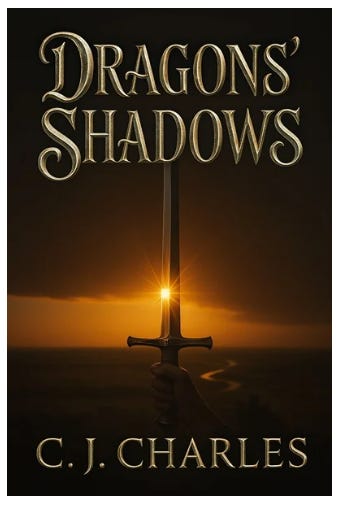
Whether I knew this and forgot it when I first sat down to write my first novel attempt, I can’t say, but at the time, I thought it a more original and satisfying idea.
That original concept? On the third try, I managed to self-publish a book, then revised it again, and received a free-to-read prequel.
All fantasy sits on a spectrum with science fiction and myth, and labels serve readers more than writers
Conan’s Hyborian Age works because Howard gave it pseudo-historical weight: a world 12,000 years before Sumer, where civilisations rose and fell. Recent finds like Göbekli Tepe make that premise feel less like wild speculation and more like inspired guesswork.
I have less trouble with the label Urban Fantasy because, like the related steampunk or diesel-punk labels, it describes technology beyond the sword but still with sorcery or adjacent supernatural elements.
These labels help as we surf the digital bookshops of the C21st; they allow us to find interesting mashups, as authors combine classic genre titles.
I’ve mentioned in an earlier newsletter that much of what people consider straight fiction is, in fact, subtle science fiction. James Bond, especially in the cinema, is a great example of that. When you have a character like Robin Hood who is exceptional at something, unerring accuracy with a bow, it’s fantasy.
So mash-ups are as old as dirt; however, we’re better at seeing them, and there are more examples in print.
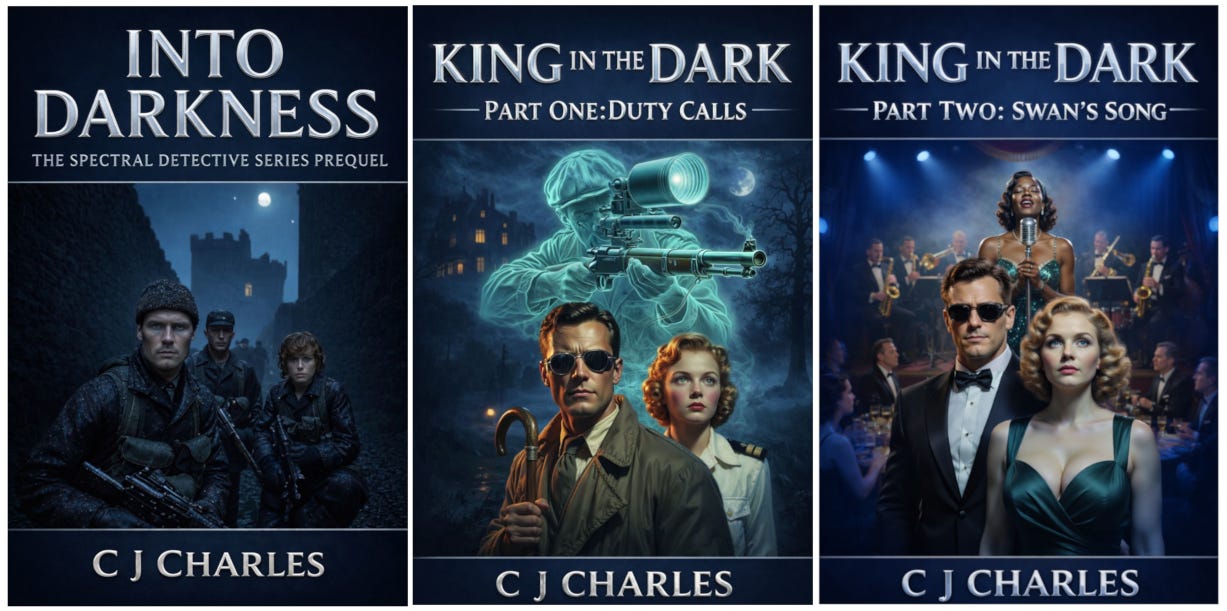
My own Spectral Detective series is historical urban fantasy, as it is set in a version of the real world, not quite alternative history, as events in 1945 play out as history records, but includes fantasy, given the hero’s ability to see a supernatural world.
My read-through is ongoing; I still hope to launch the latest e-book soon.
As a writer, I think about how to label ideas, if only to act as signposts to the reader. Another poster asked, in the most niche way possible: “What genre are you writing?”
For My Boy Jack, I landed on Dark Science, Fantasy, Horror, Historical Fiction, Gothic, coming-of-age, adventure.
In the end, all I can do is tell the best story I can and hope the reader enjoys it.
What about you? What’s the most delightfully niche—or absurdly long genre label you’ve used—or would love to see someone try?