
From Iceberg to Heartfelt.
It’s Good Friday once again. A week hath passed, the draft of King in the Dark: Part Two — Swan’s Song is being polished—again, second read through… and so again I pause.
March: “In like a lion, out like a lamb” or vice versa.
While March is over, the ‘lion’ is late, the genteel ‘lamb-like’ start to last month, as the proverb warns, promises a ‘lion-like’ end, and Storm Dave hits this weekend. What’s a few days between friends?
Right now, it’s just a bit grey and damp. Not the weather to root for? However, better than what is promised to come.
Kurt Vonnegut’s second rule from his list of eight that grace the introduction to a short story collection called Bagombo Snuff Box, reads:
Give the reader at least one character he or she can root for. Give the audience someone to care about and invest in emotionally.
I’m a fan of heroic fiction. Comic books, television, and film shaped me as a boy. Morally good heroes don’t need to be simplistic; their stories can be rich with morally complex themes.
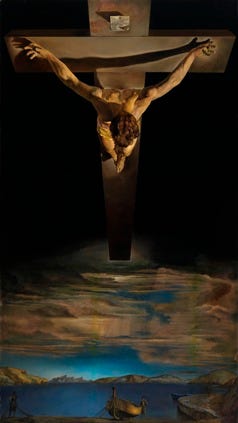
Today is Good Friday.
The Gospel story centres on an absolutely morally good man—Jesus—yet it is far from simple. He is without sin, but surrounded by confusion, betrayal, and denial from his own disciples. Even Pilate, the Roman Prefect, is torn between expedience and justice. The crowds shift from waving palms to crying, “Release Barabbas.”
Not every story needs to be messianic in tone; grey, complicated characters are interesting because they are human. Take Peter: he draws a sword to defend Jesus, then denies knowing him three times around a fire—until the cock crows.
Rooting for a dull, wet day because it’s better than the promised Storm Dave is another kind of story. Robin Hood becomes an outlaw. James Bond is a “blunt instrument” according to Fleming, licensed to kill for Queen and Country. Sherlock Holmes operates outside the law and prioritises logic over emotion; Watson grounds him. Star Trek would invert this with Kirk and Spock.
However, there’s more to Vonnegut’s rule than simply having someone to root for. We want Elizabeth Bennett to succeed because Austin is writing about human experience. Today, Pemberley is a world removed in time and space. It’s about caring—emotional investment.
That demands a world more complicated and rich than the words on the page describe, one that exists in the writer’s mind—or possibly supporting notes.

Hemingway’s Iceberg theory in practice.
The story is the tiny part that is seen. However, it doesn’t ignore what lies beneath; it acknowledges it, often in a tacit and incomplete way. Letting the reader glimpse the refracted and distorted shape of the ice below the water grants the fiction a semblance of reality, because that’s how I tell stories in the real world.
I address what matters, I don’t lay out my hopes, wants and dreams, baring my soul... but a curated snippet of my life, stripped down to what matters, what is unusual. My story about, say, a drive into town matters because “Gosh! I avoided an accident.” It’s not about the mechanical details of how a car is driven. While changing gear might be alien to Jane Austin, for many today, it’s a lived experience.
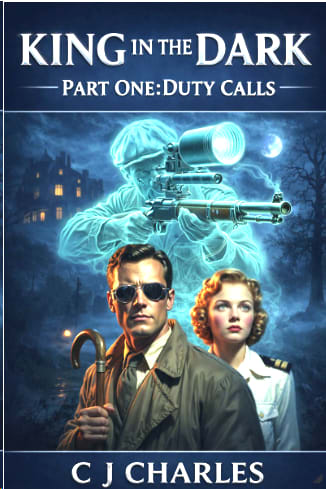
To imbue a character with rootin-tootin pull, to get a reader care and invest, I need to hold in my mind a “sim” of greater depth and detail. Withholding all but the salient details from the page.
For Arthur Raphael King, there are glimpses, visions of babe-come-boy-hood, call backs to missions, shown at length or briefly told.
In Into Darkness and King in the Dark, the things I know about his backstory are just touched on, and how these affect the story in the future are only hinted at.
Have I succeeded in creating a character that you, dear reader, can root for, care about and invest in emotionally?
Read the free Prequel, pick up Part One, and the soon-to-be-released Part Two—and let me know!