It’s Friday once more. A week hath passed, the draft of King in the Dark: Part Two — Swan’s Song is being polished.
I’m at chapter 89 of 128 in King in the Dark. Part two commences with chapter 50. So, 39 down, 49 to go...
I pause to march backwards through Kurt Vonnegut’s list from the preface to Bagombo Snuff Box.
Next:
Rule #3: Every character should want something, even if it is only a glass of water.

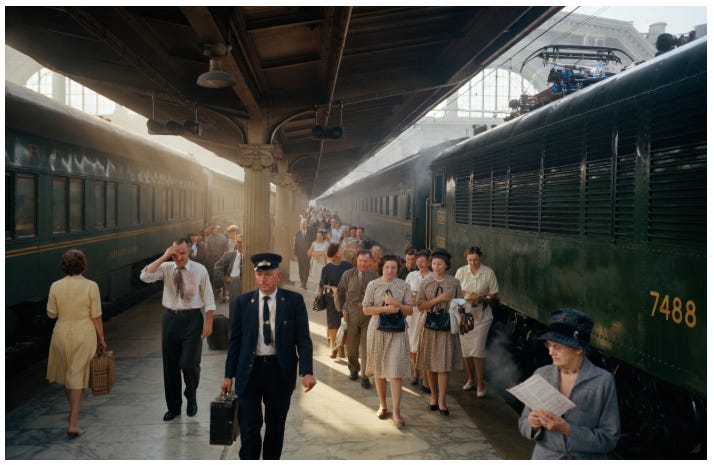
Vonnegut’s rules are impactful in part because they are a tad hyperbolic. Every character? Say everyone in a busy train station? A crowd of a hundred, of thousands? Okay, I can lean into hyperbole too, but even in, say, a crowd waiting to board a train, or cars emptying their passengers, there’s a want, at least as basic one, to get where they are going.
Passengers spilled onto the platform in a rolling surge. Sailors laughed. A woman scolded a child who dragged his feet. A man in a straw hat barked orders at a sullen porter. Then the girls appeared. Their youth, fear and desperation collected together in a hot, sweaty bundle. As a group, they stepped down from the train. Thin dresses wrinkled from hours in seats. Shoes scuffed raw at the toes. Cheap perfume fought the heat and lost. One girl clutched her handbag tight to her ribs as if it anchored her.
Chapter 72: Union Station, King in the Dark: Part Two — Swan’s Song
That raises the more complex question: how much of a character’s motives and desires do I actually need to explore on the page? If they want a glass of water, do I need to explain why they are thirsty? Or is this simple human need self-explanatory?
Have you ever read a novel, met a character and wondered why the author didn’t bother to name them?
For me, this can puncture my suspension of disbelief. More of a slow puncture than a blowout, so not like that time Fonzi jumped the shark, but enough to bump me out of the story.
Often it’s one of two things. Either the character has revealed motives, which then feels odd because I don’t even know who they are. Or they are both faceless and motiveless. Different tensions, but both create a discordant note.
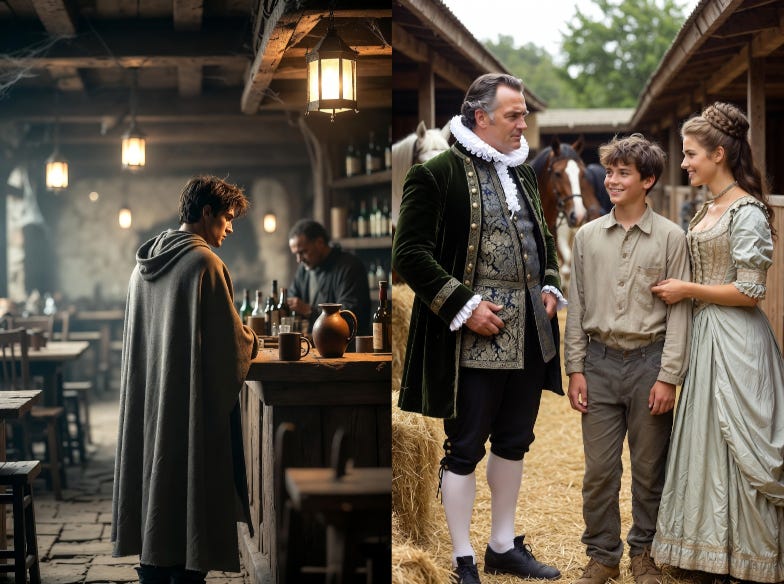
Not every character needs a name, however. Say Random Hero drops by at Random Bar, in Randomton, in Randomshire, and orders a beer from the barkeep, there’s no solid reason for RH to know the innkeeper’s name. It’s worth noting that wants can be negative—maybe the innkeeper doesn’t want to sell RH a beer?
The more involved the action and dialogue, the greater the need to create a fuller character becomes.
Still, it can be apt for Lord Knobhead not to care about the stablehand’s name, calling him boy. However, Lady Goody Conscience might be expected to know, even if only to share a handful of words.
My solution lies in character biographies and also location sketches for significant places. I tend to create a bio when a character dialogues—even if only briefly.
For example, for King in the Dark, I created a halfway house for King after his discharge from Walter Reed Military Hospital in Washington D.C., called Albion House, and people to staff it.
Among them are…
- Charlton Redmond, Superintendent: Age 54. Former hotel manager, retained. Keeps the books, enforces rules, and liaises with Walter Reed. Gruff, organised, fond of routine.
- Samuel “Sam” Pryor – Gardener/Handyman: Age 62. Retired groundskeeper. Tends the yard and vegetable patch. Quiet, pipe-smoker, with a fondness for telling war stories from 1918.
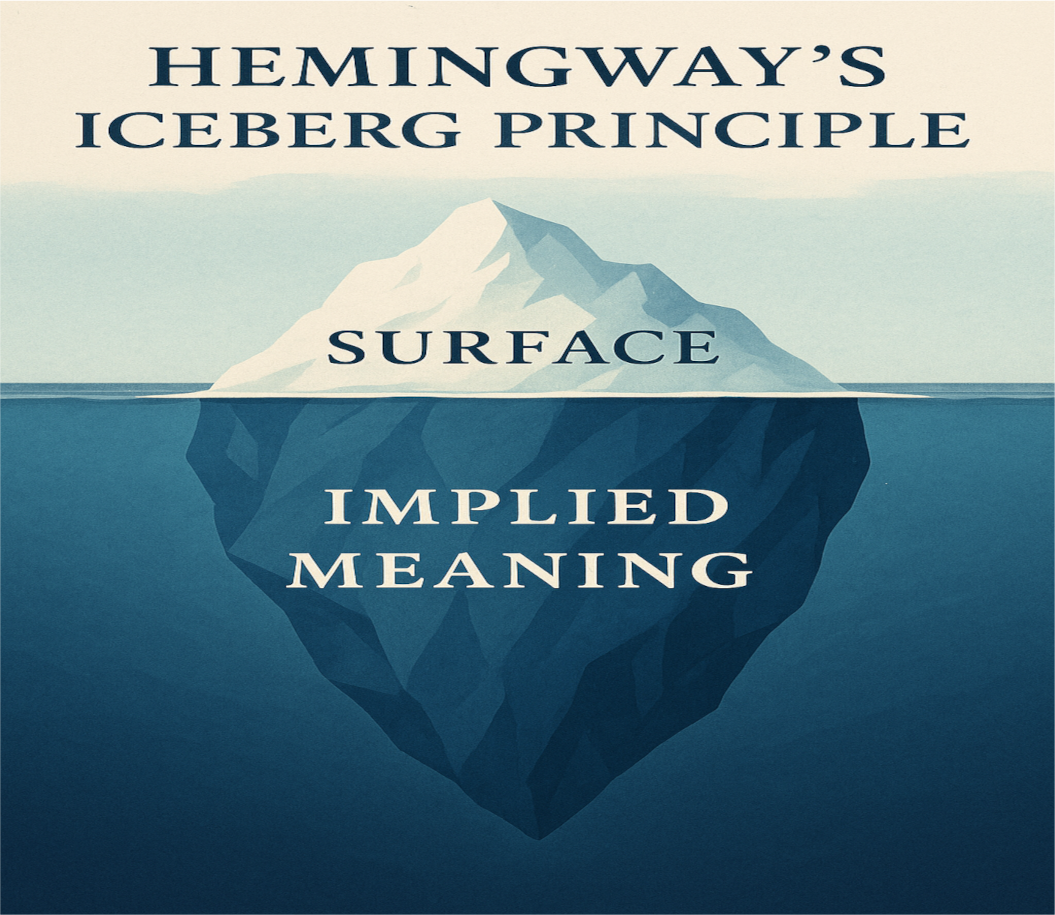
As it happens, Sam didn’t make the cut for the novel; it doesn’t matter because, as per Hemingway’s Iceberg principle, his existence remained below the water line.
The question becomes how much to include…
The only way I rationalise it is how I tell stories in real life, talking to my friends and family, say, telling them an anecdote about what happened to me when I went to get fuel, or buy a loaf of bread.
What do I include in my account, and what would I naturally omit? I cut the obvious things; the story is about what is remarkable, worthy of remark. Not how to pick up a loaf of bread and pay at the till.
“I saw two hawks fighting, as I filled up my tank.”
That’s the flipside of the coin: the more information we invent, the greater the temptation to overload the story. I remember reading Stephen King last century and being frustrated by the meandering backstories of secondary characters; I wanted to know what happened next.
Maybe that’s the final takeaway: it’s not only a glass of water, but a simple, relatable and accessible want. A motive that doesn’t need a novelette to explain. It’s a Goldilocks problem, enough heat to be palatable, not too much to burn their interest, or too little so the story comes off cold.