As my long-suffering, irregular readers might remember, I began working backwards through Kurt Vonnegut’s famous list of 8 rules for creative writing, which appeared in the preface to his 1999 short story collection Bagombo Snuff Box.
After a two-week hiatus, it’s a fitting time to return, and in reverse order, the next rule is #4
Every sentence must do one of two things: reveal character or advance the action.
Why so apt?
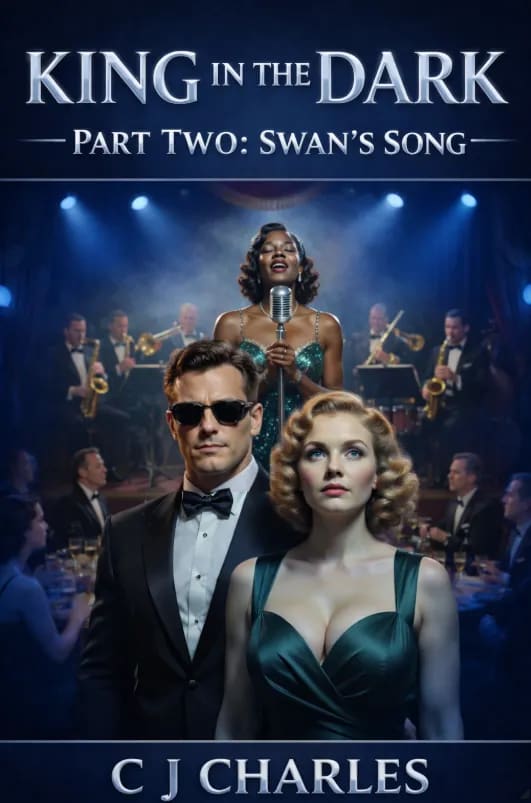
Well, I’ve completed the second part of King in the Dark. Here’s a preview of the cover.
You can read the free novella prequel here.
Completed isn’t quite the end of the work; I need to read through the novel, polish the prose, and correct ‘waterlemons’ and other typographical errors, before I can say finished and publish.
Here, rule #4 is a pretty good touchstone. I like the simplicity of a sentence as a metric. It’s not a paragraph or even a chapter about the individual’s tortured childhood or soaring achievement as they win or fall…
How we do either is another question on my radar: show versus tell.

This is something of a perennial discussion among writers, often framed as ‘show, don’t tell’, then qualified, because most advice, writing or otherwise, is a general rule with exceptions.
I don’t think in principle it’s really complicated, complications, well, that happens when the fingers hit the keys, and the scene evolves on the page.
Some simplistic solutions offer: you can do both; writing isn’t screenwriting; and great writers in the past, in both successful and critically acclaimed works, often relied on ‘telling’.
While valid observations, these lack nuance. Reproducing a writing style from fifty, hundred, or more years ago is brilliant if that’s your desire and intention; however, how accessible that is to a modern audience is a different question.
In King in the Dark: Part Two — Swan’s Song, King is trapped and has to fight to escape his captors, a classic scene in any adventure story. Having shown him fight “…tucked in, jabbed upward…” describing the action, involving the gratuitous use of furniture, what happens next is more prosaic, I don’t quite tell, I let King’s dialogue do that, “Those knots are nice and tight. I can tell you’ve done this kind of work before.”
I could have described, i.e., shown, the captives being tied up, and described a ‘handcuff or hobble knot’, over many sentences, but that would have slowed the story’s momentum and burst the tension the fight scene creates before the escape.
The power of telling, I think, can be harmed by overuse. In much the same way, if every other word is a four-letter expletive, the impact of the curse is blunted by familiarity.
As a reader, I want to be shown what’s exciting and told about the mundane. I want the sentence to reveal character or advance the action, so I can revel in both without being bored by either.
If you press me for metric, I suspect, like many things, this is an 80/20 rule; again, there will be exceptions, with a thriller benefiting from show and something more introspective benefiting from more tell.
An important exception is that brevity of telling can create impact. Here, telling can be the polar opposite of mundane. “Jesus wept” can be more impactful than sentences describing tears rolling down cheeks and splashing on the parched earth.
Here’s where the advice hits the page: in the end, no amount of good or bad advice can make anyone a writer; only by writing can we go on an adventure to discover character and action, to tell a story that engages with the reader’s imagination.