When the outline meets reality and politely asks, ‘What now?’
As a writer, I’m a plotter; it means my answer remains…
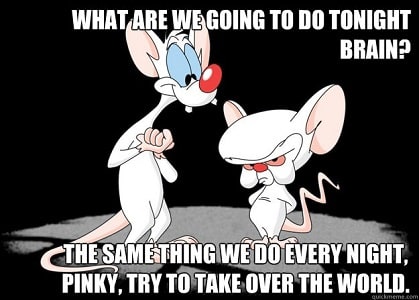
As I get older, my plans adjust. “No plan survives contact with the enemy.” Writing is one place where I get to go on rip-roaring adventures in my head. “The secret of genius is to carry the spirit of the child into old age.” In my head, I can be a genius—seriously, all my characters agree. After all, great minds think alike.
Okay, fools seldom disagree, and even in writing, I can be foolish. Last week, I pontificated about AI, only to find myself sunk by AI not telling me what, as a human, I thought to be the most important fact about the Julian Calendar in England—the date of New Year’s Day…
Plotting is in part research, and research helps, but it is no guarantee that fiction is factual. It matters because the details add depth, for example, my good friend and I chatted about sirens in 1930s and 1940s Police Cars. These ran from hand-cranked bells to belt-driven sirens to electric.
It’s a marriage.
Take a core idea: setting a blind World War II veteran from Germany in England on VE Day, then taking the story up to VJ Day in Washington, D.C., means researching what the world did and looked like last century.
Or taking a different kind of Vampire from England to the Caribbean in the mid 1600s. What’s it like then?
The answers become a fertile ground for new ideas and characters that create plot concepts.
The first outline is a skeleton. Often, these are ‘fixed moments in time’; they can be facts of history, like the end of the war in Europe and then in the Pacific in 1945. Or they can be fictions that become fixed, the lore, for example, in the Spectral Detective, it meant determining what King can perceive in his imagination and what he can’t.
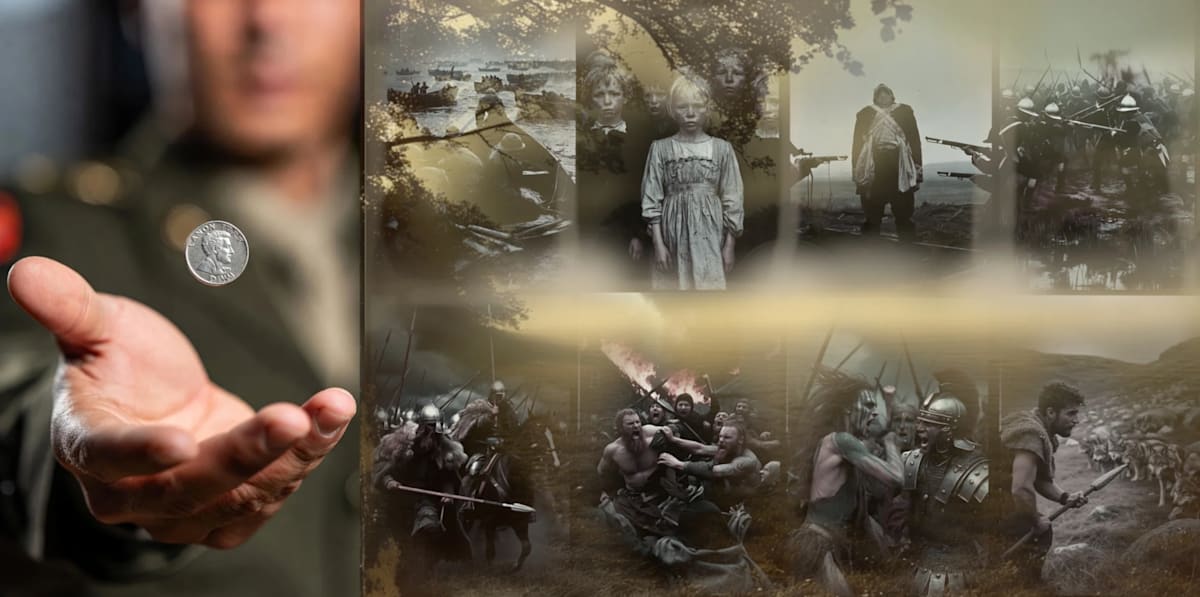
What hangs on these fixtures, dates, facts, and ideas are characters—people and places —and a sequence of events.
It’s here our plan must make contact with the page, not quite the enemy, but nonetheless here “The best-laid plans of mice and men oft’ go awry,” although that rather overstates the process. Sure, it can all go horribly wrong; however, I’d rather characterise changing the plan or plot as I write as part of the process.
What plotting does for me is allow me to run different scenarios in my head.

Trashing a few hundred words of an outline is a lot easier than rolling back a few thousand words of written text. Killing a darling before it’s properly born is easier than killing it when it’s a fully formed scene or chapter/s.
Not every subplot or plot twist idea works; plotting can’t avoid every misstep; plans will go awry, but I find it helps reduce them.
The tension remains in the execution of the general-to-the-specific. Writing the final scenes of the first Spectral Detective novel, a book of two parts, is a great example. I knew that events would reach a crescendo around VJ Day.
The events of that night, following President Truman’s announcement at 7 PM EDT, mean I have lots of people doing many things. All coming together in only a couple of hours. Hindsight is perfect, yet when I hit the page, I found my outline needed more work, both research and basic plotting; it’s a matter of timing, and travel times. As I began to write, I needed these details to work together in a harmonious, believable way.
The order from the plotting plan became a new order, and the story is better for it.

For the reader, there’s no sense of this effort. The number crunching, the miles per minute. As it should be, reading the story should be like watching a duck swimming on the surface of the pond, serene and elegant, smooth and certain. Yet under the surface, the writer is doing the work of plotting and planning. I’m then like the unseen and unseemly duck's feet paddling madly.
“The same thing we do every night, Pinky... Try to take over the world!” — Pinky and the Brain (recurring gag from the animated series, 1995–1998)
“No plan survives contact with the enemy.” — Paraphrase of Helmuth von Moltke the Elder (Prussian Field Marshal)
“The secret of genius is to carry the spirit of the child into old age, which means never losing your enthusiasm.” — Aldous Huxley
“The best-laid plans of mice and men oft go awry.” — Robert Burns