Hey, and hello to new subscribers and regular readers.
In the previous three Newsletters, I’ve mused on Kurt Vonnegut’s famous list of 8 rules for creative writing, one at a time, starting with 8,— 7 and 6. So, in reverse order, the next one is…
5. Start as close to the end as possible.
Those ardent fans who hang on my every word will remember I mentioned this rule before. There’s a related advisory that goes something along the lines of ‘Avoid opening with birth, childhood, school days, or long “how we got here” explanations—jump to the moment where the character’s life is disrupted, or the conflict ignites.’
Mark and John versus Matthew and Luke.
Vonnegut’s “8 Basics of Creative Writing” comes with a caveat; they preface a collection of short stories—Bagombo Snuff Box.
I would argue that this rule’s importance is magnified when the space is minimised. It’s because a short story, or flash-fiction, shorter still, is constrained by word count.

The need to find the point of ignition is pressing; an account of Apollo 11 could begin with the first rocket in 1232 China, even the V-2’s thunder in 1942 or Sputnik’s beep in 1957.
Ten.
Nine.
Eight...
Ignition. Liftoff. July 16, 1969. The Saturn V clears the tower…
Still, I really like the idea of steak and eggs for pre-launch breakfast.
So why kick off the Chimera Chronicles Prequel: My Boy Jack with childbirth—two in fact?
“Jack’s birth began on a cold spring day. A walled manor thirty miles from London, and a place its strange children would never forget. They remembered the womb. They recalled being born.
Two women became mothers that night.
One boy lived to remember his birthday, the other died.”
Novels allow the author to tell more of the narrative, but that alone doesn’t justify this choice.
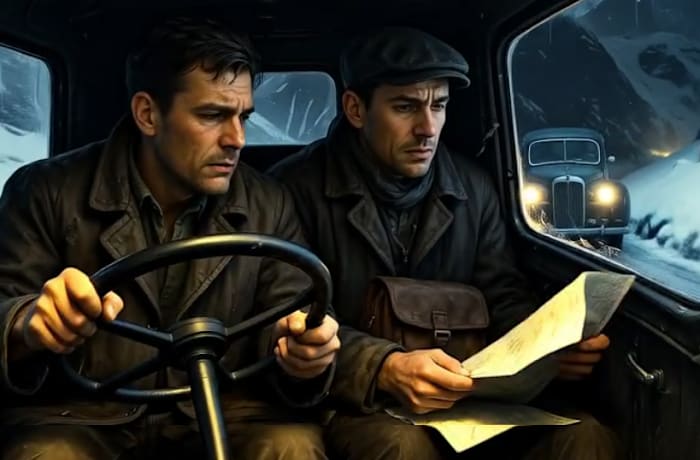
I didn’t start Arthur Raphael King’s story until adulthood, but fighting to keep a truck on the road in ice and snow—chased by the Secret Police across the Pyrenees. Heroic journeys often start when greatness is thrust upon the hero by tragedy. King’s service in WWII exemplifies this.
Starting his story as a babe in arms doesn’t make sense. It continues in King in the Dark: Part One: Duty Calls
Jack, however, is a different kind of character. In mythic traditions, the hero's birth isn't preamble—it's prophecy fulfilled, destiny ignited.
Perseus slays Medusa to save Andromeda from the Kraken because he is the son of Zeus. King Arthur’s legend begins because he is born to his role.
As Bill puts it in Kill Bill Vol. 2, 'Superman was born Superman. When Superman wakes up in the morning, he’s Superman.’
When a narrative is as well-known as this, a writer can get away with the shortest of stories. “Doomed planet. Desperate scientists. Last hope. Kindly couple.” — Grant Morrison, All-Star Superman #1
The Chimera Chronicles is full of familiar tropes in a Harry Potter kind of way, which is another example of an infancy story. J.K. Rowling begins with a fifteen-month-old Harry, a not-so-kindly couple, and more evil step-parents than the compassionate Kents.
I begin with Jack’s birth —because in My Boy Jack the mark of power, and the otherness are present from before their first breath. When your supporting characters are functionally immortal—vampires and other monsters, and your backstory dates to the dawn of humanity, the untold part of the mythology is vast.
When Rowling starts with a baby Harry, she is starting as close to the end as possible to introduce a lore-rich fictional universe. Not only does the reader get to see how the character becomes an adult hero, but the complexities of the “Wizarding World” are explored through the protagonist’s experience.
It’s not a pedestrian tale of dirty nappies and missed homework, because the challenges the child faces are far from everyday; they are life-defining, and in The Chimera Chronicles, some have very pointy, life-ending teeth.