Hey, and hello to new subscribers and regular readers.
“Immature poets imitate; mature poets steal.” — T.S. Eliot.
There are many maxims about writing.
Furtivus means stolen or hidden, and I stole the idea of hiddenness from Hemingway — “If a writer of prose knows enough about what he is writing about, he may omit things that he knows... The dignity of movement of an iceberg is due to only one-eighth of it being above water”.
Still, where to begin. That’s a pressing question, whether it’s a blog—slash—newsletter, or a multi-volume fictional universe.
I’d sum the advice as ‘make it exciting, Bob’.
A Thriller, say Bond, is going to be exciting in one way...
“The scent and smoke and sweat of a casino are nauseating at three in the morning.” — Ian Fleming – Casino Royale (1953)
but Pride and Prejudice, we might say, is engaging...
“It is a truth universally acknowledged, that a single man in possession of a good fortune, must be in want of a wife.” — Jane Austen – Pride and Prejudice (1813)
Kurt Vonnegut says, “Start as close to the end as possible.”
And that’s how I approached the initial plotting for my stories—jump in late, stakes high.
The Reader Magnet concept. Writing a short story/novella introduction is a strong promotional idea: a free sample, but it pitched me back a step.
Whatever way I looked at this, it meant crafting two compelling beginnings.
With the Spectral Detective, I first plotted in 1947 in New York City. For Prequel: Into Darkness, I pushed back to 1943. King starts the story as a capable operator. In 1945, he commands a commando raid on a Nazi stronghold.
It’s very much his origin story in the classic pulp/comic-book, adventure-serial way. An adult protagonist facing a life-defining event.
However, my first attempt became King in the Dark—a novel. I have, more by accident than design, my two beginnings.
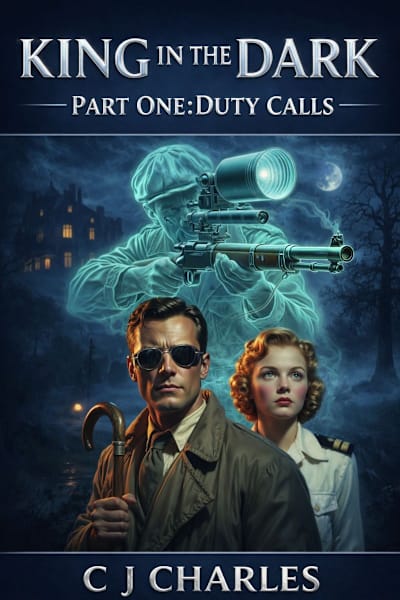
The Spectral Detective Free to Read Prequel!
Book 1 — King in the DarkPart One: Duty Calls
The Chimera Chronicles presented a different challenge. I’d identified a key exciting event for an attention-grabbing opening scene. I intended to start the first novel midway through Jack and his brother’s childhood—the cusp of adult life in 1650, as how Jack grows up defines his adulthood.
For the Prequel My Boy Jack, I broke the usual rules, and I went back to Jack’s birth, 1639.
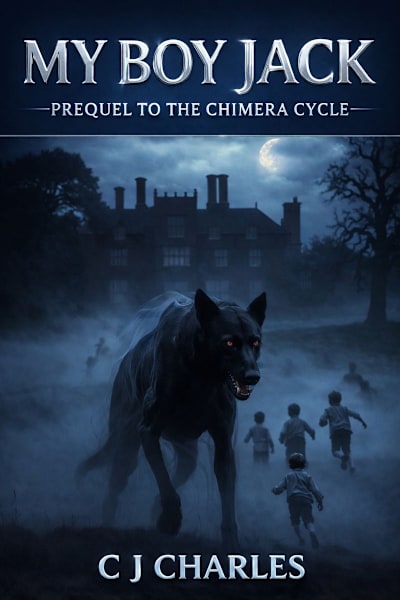
Children of the Dominion. Born to serve. Raised to hunt. Destined to break free.
MY BOY JACKPREQUEL TO THE CHIMERA CYCLE Free Novella!
It’s not the start of the overarching story. The agony and the ecstasy of world-building with functional immortal characters means supporting players have their own stories going back centuries—even thousands of years—it’s a really big iceberg. For this monster's universe, it is already late, and the stakes are high. The prey no longer have pointy sticks; they have gunpowder, they are organised, and more numerous.
Still, I wanted the story to be about the lead actor, the chief protagonist, so I started in the beginning.
Jack’s birth began on a cold spring day. A walled manor thirty miles from London, and a place its strange children would never forget. They remembered the womb. They recalled being born.
Two women became mothers that night.
One boy lived to remember his birthday, the other died.
I aimed to thread the opening between engaging and exciting—to be discordant.
Throughout the writing of the prequel to the Chimera Chronicles—My Boy Jack, I intended to begin the first novel-length entry as first plotted.
Then I didn’t.
I enjoyed creating the story, and others enjoyed reading it.
So in for a penny…
The new novel now follows Jack to Wales, 1645, to a new home and school, with some adventures on the way. There’s nothing new about boarding school stories, or indeed monster academies; tropes are there to use, like wheels, which are reinvented in specific ways, and I hope exciting and engaging ones.